
Your teeth and gums tell a story that starts in childhood and continues for the rest of your life, and researchers are learning more every year about how early habits shape outcomes decades later. Recent studies have connected oral health to everything from heart disease to cognitive decline, making it clear that a healthy mouth is about far more than a nice smile. If you have ever wondered whether skipping a checkup or ignoring a small cavity really matters in the long run, the science now offers some concrete answers. This article breaks down what the latest research reveals and what it means for the choices you make at every stage of life.
Early Childhood Habits Set the Foundation
New longitudinal studies tracking children from toddlerhood into adulthood show that oral health habits formed before age six have a measurable impact on decay rates and gum health decades later. Children who develop consistent brushing routines and receive early preventive care tend to have fewer cavities as adults and are less likely to need extensive restorative work. Researchers point to the establishment of healthy bacteria in the mouth as one reason early intervention matters so much, since the oral microbiome formed in childhood tends to persist with only gradual changes over time.
This is why pediatric-focused care has become such a research priority, with several studies specifically highlighting the value of visiting a kids dentist for early screenings rather than waiting until problems appear. A kids dentist is trained to spot developmental issues, guide parents on fluoride use, and catch decay before it spreads, all of which compound into better outcomes years later. The data suggests that the earlier these relationships begin, the more likely children are to view dental visits as routine rather than something to fear.
- Children with dental visits before age two show lower cavity rates by age five
- Early fluoride exposure reduces decay risk by a significant margin in most studies
- Kids who receive sealants young are less likely to need fillings later
- Positive early dental experiences reduce adult dental anxiety
Gum Disease and Its Connection to Whole Body Health
Perhaps the most striking findings from recent research involve the link between periodontal disease and systemic conditions like diabetes, cardiovascular disease, and even Alzheimer’s. Studies published in the last few years have found that chronic gum inflammation may allow bacteria to enter the bloodstream, triggering inflammatory responses that affect organs far from the mouth. This has shifted how many researchers and clinicians think about gum health, treating it not as a cosmetic concern but as a genuine marker of overall wellness.
The implications are significant for how people prioritize their oral care as they age. Bleeding gums, persistent bad breath, and receding gum lines are no longer dismissed as minor annoyances but are now recognized as early warning signs worth addressing quickly. Researchers emphasize that reversing early gum disease is far easier than managing it once it becomes chronic, which reinforces the value of catching symptoms early.
- Gum disease has been linked to a higher risk of heart attack and stroke
- Diabetics with poor gum health often see worse blood sugar control
- Inflammatory markers from gum disease may affect brain health over time
- Early-stage gingivitis is fully reversible with proper care
Adult Prevention Habits That Actually Move the Needle
A wave of new research has tried to answer a practical question many adults ask: which daily habits genuinely make a difference over decades, and which are just marketing? The studies consistently point to a small set of behaviors that outperform everything else, including twice-daily brushing with fluoride toothpaste, daily flossing or interdental cleaning, and limiting sugary or acidic foods between meals. Interestingly, the frequency of professional cleanings appears to matter less than consistency in these daily habits, though both work together for the best results.
Regular checkups still play an important role, since they allow small issues to be caught before they become painful or expensive problems. Data shows that adults who maintain consistent six-month visits are significantly less likely to require major restorative procedures later in life. Skipping visits for years at a time, even with good home habits, tends to correlate with worse long-term outcomes because certain issues like bone loss or hidden decay are only visible through professional examination.
- Flossing reduces gum disease risk more than mouthwash alone
- Electric toothbrushes show modestly better plaque removal in long-term studies
- Sugary drinks between meals are a bigger risk factor than sugar at mealtimes
- Consistency matters more than intensity for most preventive habits
Tooth Loss and Restoration Choices Later in Life
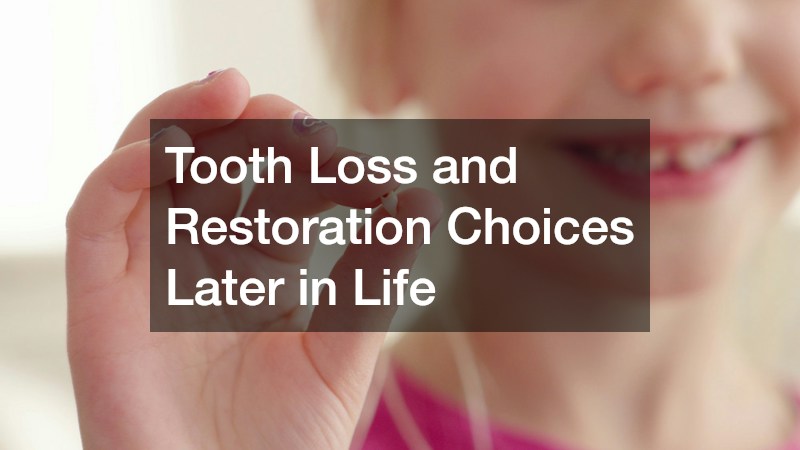
One of the more sobering findings from recent research is how common tooth loss remains among older adults, even though rates have declined over the past few decades. Studies show that untreated decay, gum disease, and injury remain the leading causes, and that people who lose teeth earlier in life tend to experience faster bone density loss in the jaw. This bone loss can affect facial structure and even complicate future restorative options if it goes unaddressed for too long.
This is where research on restorative options becomes especially relevant, since outcomes vary widely depending on the approach chosen and how quickly someone acts after losing a tooth. Many studies now point to the best dental implants as offering the strongest long-term outcomes in terms of bone preservation, chewing function, and durability compared to bridges or dentures. Implants that are properly placed and maintained have shown success rates above ninety percent over ten-year follow-up periods, which is a notable improvement over older restorative methods.
- Bone loss can begin within months of losing a tooth
- Bridges and dentures do not stimulate the jawbone the way implants do
- Success rates for implants depend heavily on bone density and oral hygiene
- Smoking significantly lowers long-term implant success rates
The Role of Diet and Nutrition in Long-Term Oral Outcomes
Nutrition research has increasingly focused on how diet shapes oral health trajectories over a lifetime, not just in terms of sugar intake but overall nutrient balance. Diets low in calcium, vitamin D, and vitamin C have been linked to weaker enamel and slower healing of gum tissue, while diets rich in fiber and antioxidants appear to support a healthier oral microbiome. Some studies have even found that people who eat a Mediterranean-style diet show lower rates of gum disease compared to those eating a highly processed diet.
Hydration also plays an underappreciated role, since saliva is one of the mouth’s primary defenses against bacteria and acid. Chronic dehydration or conditions that reduce saliva production, including certain medications, have been shown to increase cavity risk substantially. Researchers now recommend viewing diet as a preventive tool alongside brushing and flossing rather than a separate consideration.
- Crunchy vegetables can help mechanically clean teeth between brushings
- Dairy products provide calcium and casein that support enamel strength
- Frequent snacking on carbohydrates feeds decay-causing bacteria more than meal-based eating
- Staying hydrated supports healthy saliva production
Access to Professional Dental Care Across a Lifetime

Long-term studies consistently show that regular access to professional care is one of the strongest predictors of good oral health outcomes, more so than income level alone in some populations. Researchers tracking cohorts over 20 to 30 years have found that consistent dental visits correlate with fewer extractions, lower rates of gum disease, and less need for costly restorative work later in life. People who see the same dentist over many years tend to receive more personalized, proactive care because their provider can track subtle changes in their oral health over time. A dentist familiar with a patient’s history can compare current X-rays against years of past imaging, spotting patterns that a new provider might miss entirely. This continuity allows for earlier detection of issues like enamel wear, bite misalignment, or early signs of oral cancer. It also means fewer redundant tests, more accurate risk assessments for conditions like periodontal disease, and treatment plans that account for a patient’s specific habits, whether that’s teeth grinding, medication side effects, or dietary patterns. Access barriers still complicate this picture, though. Rural residents, uninsured adults, and people who move frequently often cycle through multiple providers, losing the benefits of that continuous record and sometimes delaying care until problems become urgent.
Researchers have also studied how gaps in care, often caused by moving, changing insurance, or financial stress, tend to correlate with worse outcomes even among people who otherwise maintain good habits. One study tracking adults over several years found that those with coverage lapses of six months or longer were significantly more likely to require restorative work, such as fillings or crowns, compared to those with uninterrupted access. Even brief disruptions can allow minor issues, like early enamel erosion or gum inflammation, to progress unnoticed. Rebuilding a relationship with new dentists after a long gap can take time, since new providers need to establish a baseline before they can accurately track changes. Without prior records or X-rays, a dentist may need one or two additional visits just to distinguish between longstanding conditions and new developments. This delay isn’t just an inconvenience; it can push back the timeline for catching problems early, when treatment tends to be simpler and less costly. Life transitions that commonly trigger these gaps include relocating for a job, aging off a parent’s insurance plan, or losing employer-sponsored coverage during a career change. Each of these moments introduces a natural risk point where dental visits get deprioritized in favor of more immediate concerns. This underscores why maintaining consistent access to care, even during major life transitions, is worth prioritizing, and why seeking out community clinics or interim coverage options during gaps can meaningfully protect long-term outcomes.
- Continuity of care with the same provider improves early detection of oral cancer, periodontal disease, and other conditions, since dentists can spot subtle changes against a known baseline
- Gaps in dental visits of more than two years correlate with worse long-term outcomes, including higher rates of untreated decay and tooth loss later in life
- Insurance and cost barriers remain a leading reason people delay care, with adults lacking dental coverage far less likely to visit a dentist annually than those with it
- Even insured patients often face high out-of-pocket costs for major procedures, since many plans cap annual benefits well below the cost of crowns or root canals
- Community health clinics are expanding low-cost screening programs for underserved populations, often using sliding-fee scales based on income
- Mobile dental units and school-based sealant programs are also emerging as ways to reach children and rural residents who lack easy access to a fixed clinic
The research is clear that oral health is a lifelong project, with habits formed in childhood and choices made in adulthood both shaping outcomes well into old age. Small, consistent actions like daily brushing, timely checkups, and a balanced diet tend to outperform occasional intense efforts, while addressing problems early almost always leads to better long-term results. Whether you are guiding a child through their first dental visits or considering restorative options later in life, the science supports staying proactive rather than reactive. Scheduling a checkup or asking questions at your next visit is a simple, evidence-backed step toward protecting your smile for decades to come.