
Modern orthopedic surgery has reached a point where a hip replacement is considered one of the most successful and life-changing procedures available. Surgeons can replace a worn, arthritic joint with a high-tech prosthesis in a matter of hours, often allowing patients to return home the same day. However, it is a common misconception that the surgery itself is the finish line. In reality, the procedure is simply the catalyst for change. The true transformation occurs during the months of recovery that follow.
Engaging in a structured physical therapy rehab program is the essential bridge that turns a successful surgery into a successful life, ensuring that the new joint provides the mobility and freedom it was designed for.
The Brain and Body Disconnect
When a person lives with chronic hip pain for years, their body develops a series of compensation patterns. To avoid pain, the brain subconsciously changes the way the person walks, stands, and even sits. Muscles like the gluteus medius may become weak or dormant, while other muscles, like the lower back or the opposite leg, overwork to make up the difference.
A new hip joint removes the source of the pain, but it does not automatically erase these years of bad habits. Without professional guidance, a patient may continue to limp or lean even with a brand-new joint. A therapist’s primary job is to rewire the connection between the brain and the body. Through specific gait training and neuromuscular re-education, they help the patient find their true center and move with the fluid, symmetrical patterns that protect the longevity of the replacement.
Awakening the Supporting Muscles
The success of a hip replacement depends heavily on the strength of the muscles surrounding the joint. The glutes, quadriceps, and core act as the engine and the shocks for the new hip. If these muscles are weak, the joint itself takes on too much stress, which can lead to premature wear or instability.
During the initial stages of recovery, a therapist focuses on isometric contractions—waking up the muscles without moving the joint through a wide range of motion. As healing progresses, the exercises transition into functional strength training. Movements like mini-squats, step-ups, and side-lying leg raises are carefully monitored to ensure they are performed with perfect form. This supervised strengthening ensures that the muscles are capable of supporting the joint during real-world activities, such as climbing stairs or getting out of a low chair.
Managing Scar Tissue and Stiffness
Every surgery involves some degree of soft tissue trauma, which leads to the formation of scar tissue. While scar tissue is a natural part of healing, if it becomes too thick or bound up, it can significantly limit a patient’s range of motion. This leads to a sensation of stiffness that makes daily life frustrating.
Physical therapists utilize manual therapy techniques to manage this. Through specialized soft tissue mobilization and gentle stretching, they ensure that the fascia and muscles around the incision remain pliable. By addressing stiffness early, they prevent the permanent loss of flexibility that can occur if a patient simply rests too much. They guide the joint through its full allowable range, ensuring that the patient can eventually bend to tie their shoes or reach for an object on the floor without restriction.
Navigating the Safety Zone
In the first few months after surgery, there are specific movements that could potentially put the new joint at risk of dislocation. These are often referred to as hip precautions. For many patients, remembering these rules—such as not crossing the legs or not bending the hip past ninety degrees—can be overwhelming and anxiety-inducing.
A rehab environment provides a safe space to practice these movements under the watchful eye of an expert. A therapist teaches the patient how to navigate their home, use the restroom, and get in and out of a car while staying within the safety zone. This education builds the patient’s confidence, reducing the fear of movement that often stalls recovery.
The Path to Long-Term Independence
The ultimate goal of recovery is a return to an active, independent lifestyle. For some, that means walking the dog around the neighborhood; for others, it means returning to the golf course or hiking trail. A physical therapist tailors the rehab program to these specific goals.
As the patient nears the end of their formal treatment, the focus shifts to balance and proprioception. They practice walking on uneven surfaces, navigating obstacles, and performing task-specific drills. This high-level training ensures that the patient doesn’t just get better, but becomes resilient enough to handle the unpredictability of daily life.
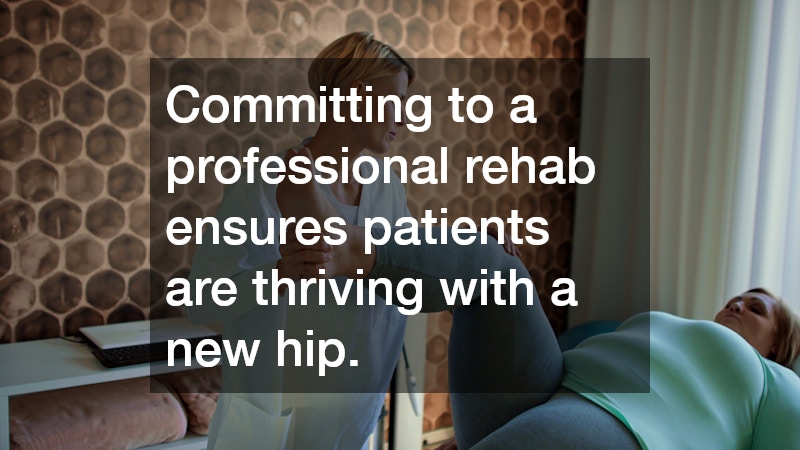
A hip replacement offers the promise of a life without pain, but that promise is only fulfilled through the hard work of rehabilitation. While the surgeon provides the hardware, the physical therapy rehab provides the software—the instructions and training that make the hardware work. By committing to a professional rehab program, patients ensure that they aren’t just living with a new hip, but thriving with one.